
Making sense of your business taxes can be frustrating and quite particular. What’s the difference between an office expense and supplies? And what even is depreciation? Never fear, Tree City Tax is here to explain the general differences between these line items on your Schedule C!
What even is a Schedule C?
This form is where a sole proprietor records their business income and expenses to determine their profit or loss for the year. Profit is taxed, and a loss may be carried forward to reduce future taxable income in the following year.
The profit or loss also applies to freelancers who don’t technically have a “business,” but still make non-wage income.
Part I includes the gross income of the business after Cost of Goods Sold (COGS), and Part II captures other business expenses. For this blog, we’ll be looking at COGS (line 4), office expenses (line 18), supplies (line 22), and depreciation (line 13).
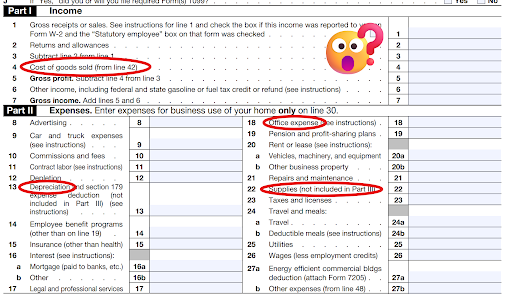
COGS vs Supplies
To start, let’s define Cost of Goods Sold, because your expenses and supplies listed separately on Schedule C are *NOT* included in your COGS. Cost of Goods includes materials and labor that go into the product you sell. Your Schedule C has a guide to calculating COGS in Part III.
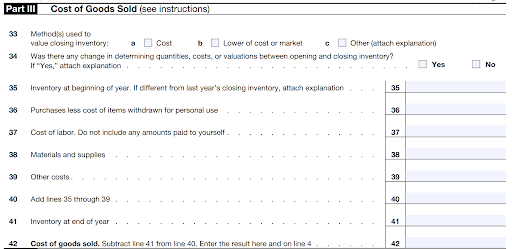
To run through a quick example of COGS, we’ll invent an imaginary coffee house: Tree City Tax & Snax Cafe.
At our cafe, the cost of goods sold would include:
- Purchases made during the year for items sold by the cafe
- Coffee beans, milk, syrups, and other drink ingredients
- Pastries and bread from local bakery
- Materials and supplies
- Cups, lids, sleeves, straws, bags, other packaging
- Shipping materials for online orders of coffee beans
- Customer loyalty punch cards included with purchases
- Coffee filters
The line for labor is generally used for manufacturing or mining operations that can directly attribute hourly wages to materials created or extracted. For our cafe, we’d include wages in Part II expenses rather than COGS.
Separately from COGS, businesses need to track supplies. Generally, this category covers consumable items that will last less than a year. Think items like pens, paper clips, rubber bands, notepads, printer ink, etc. for an office setting.
Supplies in our cafe example might include napkins, straws, sugar packets, or anything else that gets used in day to day business but isn’t directly captured in the cost of items sold. Cleaning supplies also count, because they are used regularly for the business but aren’t part of COGS.
Office Expenses vs. Depreciable Assets
Office expenses is a more general category that captures anything needed for your business to operate, and it isn’t as clearly defined as supplies. Office expenses could include postage (although the boxes and tape are supplies, or factored into COGS), software, website hosting fees, computers, recording equipment, or anything else used for your business that isn’t a consumable supply.
Some business owners choose to list out their expenses individually in the “Other” category, such as X spent on software, Y spent on podcasting equipment, etc. But it’s acceptable to include a sum total on the line for Office Expenses.
The most important thing for ALL of your deductible expenses is to maintain accurate records. Use a business checking account and debit/credit card, and do your best not to co-mingle business and personal money. The second most important thing is to keep your records consistent. You could list website expenses under “Advertising,” “Office Expenses,” or “Other,” but do it the same way each time.
In our cafe example, office expenses could include bookkeeping software, an iPad dock and card processor, replacement blender parts, and a menu chalkboard.
Long-lasting equipment that costs over $2,500 should be depreciated, spreading the expense over a period of time. For our cafe, examples of assets that depreciate include espresso machines, refrigerators, ice machines, ovens, etc.
The $2,500 threshold is due to the IRS’s De Minimis Safe Harbor election, which allows you to deduct the full cost of items up to this amount, rather than depreciating over time. However, the OBBBA made permanent 100% Bonus Depreciation, allowing businesses to deduct the full cost of any equipment purchased after January 19, 2025.
Clear as mud? Talk to your tax pro (that’s us!) if you have questions about depreciation, COGS, or the difference between office expenses and supplies. We make sure your Schedule C captures accurate expenses and we’ll advise on the best options for your business’s needs.